+234 (0) 8067333223 +234 (0) 8098883608
+234 (0) 8067333223 +234 (0) 8098883608


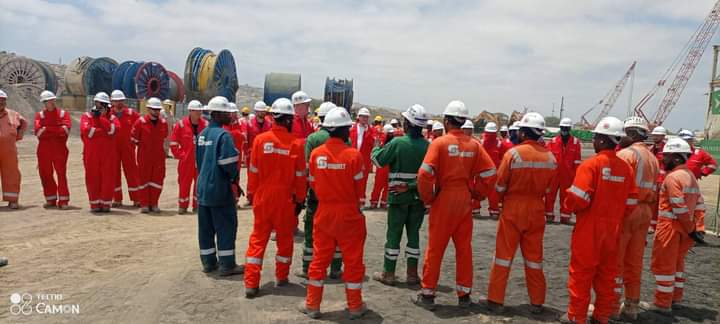
The National Diploma (ND) programme in Mechanical Engineering Technology is aimed at producing technicians with knowledge, skills and competencies to carry out installation, operation, troubleshooting and maintenance of mechanical and related systems, components and equipment for the public and private sectors of the economy.
MINIMUM ENTRY REQUIREMENTS
Candidates for admission into the programme should have a minimum of:
Senior Secondary School Certificate (SSSC) with credit passes in at least five subjects at not more than two sittings which must include English, Mathematics, Physics, Chemistry, and one other subject from Biology, agricultural science, further mathematics, economics, statistics, technical drawing, auto-mechanics, metal work and other relevant subject.
GCE ´O‟ Level or its equivalent (Teachers Grade II or Senior School Certificate) with credit passes in five relevant subjects as specified in 1 above.
National Technical Certificate (NTC) with credit passes in Mathematics, Physics, Chemistry, English Language and in the Mechanical Trade areas.
Most industries rely on a form of mechanical systems, and mechanical engineering is thought to be one of the most diverse of all engineering disciplines. Due to this, there are employment opportunities across several sectors. Thanks to their dynamism, they can work in various industries including manufacturing, oil and gas, civil, electrical and in automobile industry which is their core aspect.
A marine engineer is responsible for the operation, maintenance and repair of all major mechanical and engineered equipment onboard a ship.
There are several mechanical systems that help in the operations of any vessel like the propulsion mechanics, electricity and power generation system, lubrication, fuel systems, water distillation, lighting and air conditioning system etc. These are all included in the technical responsibilities of a marine engineer.
The National Diploma course in Marine Engineering is designed to train intending sea-going marine engineers that will mount various vessels from fishing trawlers to cargo vessels on local and international waters.
The programme aims to impart the required theoretical knowledge and practical skill to students in areas such as Engineering Planning, Practice, Management, Operations, Trouble-shooting, Repairs and Maintenance of Marine Engineering Systems and Equipment suitable for technicians.
The ND Marine Engineering syllabus offers a robust content in both theory and practical as required by the statutory regulatory agencies; The Nigeria Board for Technical Education (N.B.T.E) and The Nigeria Maritime Administration and Safety Agency (NIMASA).
The Programme is segmented into course-work, Project and Supervised Work Experience Schemes (SIWES), otherwise called cadetship in the Marine Field.
The course-work and Project takes a minimum of two academic sessions and a maximum of three. And the cadetship takes last an additional one year, the maximum duration of the course is not to exceed five sessions.
Prospects abound for students that have undergone training in Marine Engineering as they could be employed by Maritime Companies to work on ships, they can also work with the Nigerian Port Authorities, Dockyards. Ship yards, International oil Companies (IOCs), International Association of Classification Societies (IACS) and well as The Nigerian Navy.
Admission Requirements
Admission to the ND Marine Engineering programme is without JAMB
Candidates are only required to have passed five (5) subjects at Ordinary Level of WAEC/NECO/GCE or NABTEB. The Required ‘O’ Level Subjects are English Language, Mathematics, Physics, Chemistry, and any one (1) from Further Mathematics, Technical Drawing, Biology/Agricultural Science and Geography.
General entry Requirements
Applicants must have:
Screening/Aptitude Test:
Candidates are subjected to Screening Exercise/Aptitude Test by sitting for the Graf-Comas Admission and Matriculation Board Exam (GAMBE) and score above 150 which is the given cut off mark stipulated by the college as may from time to time be decided by the Management/Regulatory Authority.
Candidates must pass Medical Test and Physical Fitness before he/she can be considered for admission.
Fees schedule for faculty of Engineering:
| Course | School Fees | Acceptance Fee | Uniform | Medical | Sub Total |
|---|---|---|---|---|---|
| Marine Engineering | 450,000.00 | 15,00.00 | 48,000.00 | 15,000.00 | 428,000.00 |
| Civil Engineering | 350,000.00 | 15,00.00 | 48,000.00 | 15,000.00 | 428,000.00 |
| Petroleum Engineering | 700,000.00 | 15,00.00 | 48,000.00 | 15,000.00 | 778,000.00 |
| Petroleum and Gas Engineering | 700,000.00 | 15,00.00 | 20,000.00 | 15,000.00 | 300,000.00 |
| Petrochemical Engineering | 700,000.00 | 15,00.00 | 48,000.00 | 15,000.00 | 298,000.00 |
| Chemical Engineering | 700,000.00 | 15,00.00 | 48,000.00 | 15,000.00 | 298,000.00 |
| Mechanical Engineering | 300,000.00 | 15,00.00 | 48,000.00 | 15,000.00 | 378,000.00 |
| Electrical Engineering | 285,000.00 | 15,00.00 | 48,000.00 | 15,000.00 | 363,000.00 |
| Computer Engineering | 280,000.00 | 15,00.00 | 48,000.00 | 15,000.00 | 358,000.00 |
How to make payments:
You can make payments online or manually
To pay manually, make a transfer to the school account below and send proof of payment as well as your details to support@grafordcollege.com
Account Number:1229433888
Account Name: GRAFORD COLLEGE OF MARITIME & AVIATION STUDIES
Bank: Zenith Bank PLC
